PrismetSage Deutschle

Work / Desktop & Systems

Helm

A KDE desktop built like a command bridge.

Personal desktop environment

Inside the work

A design system for useful instruments.

Rendered widgets · sample data

My contribution

Design and engineering of the desktop control environment, including QML widget faces and their shared visual language.

Engineering decisions

  1. Share the instrument frame

    A common panel component and palette tokens give clocks, resource meters and controls a consistent structure without making every face identical.

  2. Make each face inspectable

    Standalone sample-data rendering lets individual QML faces be previewed outside a full desktop session, including offscreen capture.

What you can inspect

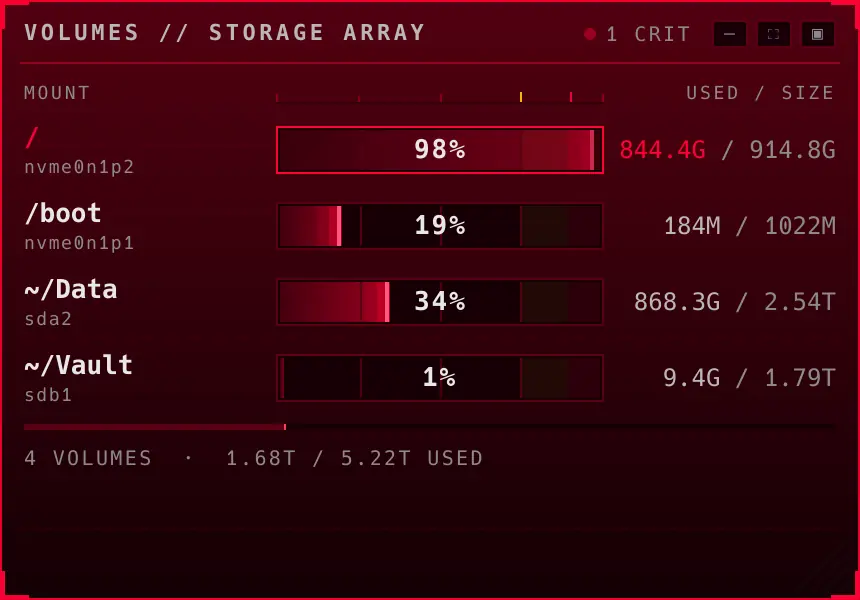
The gallery shows standalone clock, CPU, GPU, storage and instrument renders with sample data. They demonstrate the widget design; the displayed values are not current machine readings.

Explore the project images ↑
Helm is a custom KDE Plasma desktop: native QML instruments for clocks, CPU, GPU, network and storage, alongside small arcade games and controls for arranging the workspace. Shared panel components and palette tokens give the instruments one visual language.

This record covers the Linux desktop and its widget design. Command Helm, the separately developed editor and phone companion, has its own project history.

Why it exists

Helm gives clocks, system meters and small desktop games a common instrument language. Individual QML faces can render outside a full Plasma session using sample data; that is how the widget specimens in this gallery were made.

Highlights

  • Clocks, system instruments and small games in a shared panel language
  • Standalone rendering for inspecting individual QML faces
  • Shared chrome and palette tokens across the widget family
  • Layout controls for arranging and recalling the workspace

The faces

Horizon

Helm's Meridian world clock face, with a timeline strip above a grid of 16 city clocks and the local HELM clock, each with its UTC offset.
Helm's Chronos clock face: a large digital time readout with red seconds, a tick scale, the date, system uptime and kernel version.

Telemetry

Helm's Core Matrix face for a Ryzen 7900X, with 34 percent aggregate load, temperature, clock speed and a grid of 24 per-thread load tiles.
Helm's GPU Core face for an RTX 3080, with load, temperature and power readouts, a pixel-grid utilization history, and VRAM and disk usage bars.
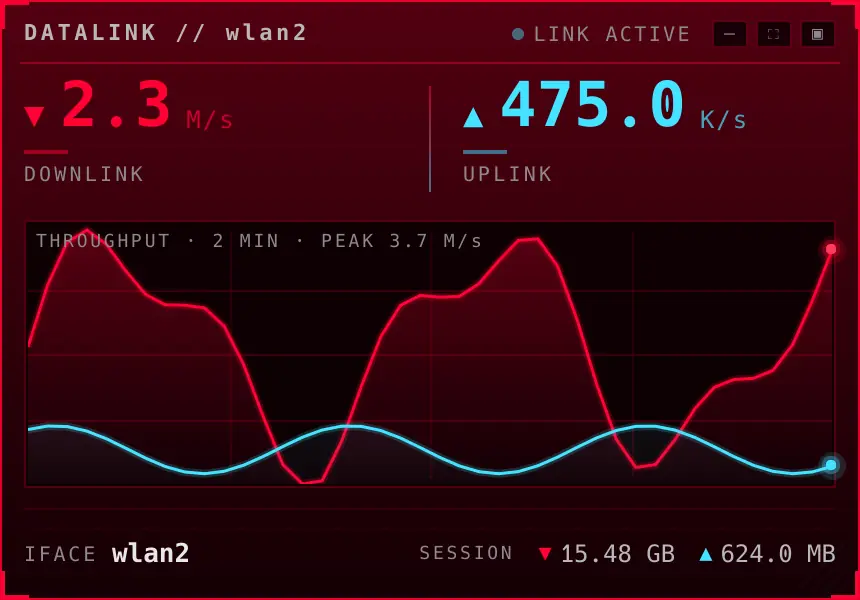
Helm's Datalink face for the wlan2 interface, with downlink and uplink speeds, a two-minute throughput graph and session totals.
Helm's Volumes storage array face listing four mounts with usage bars, with the root volume flagged critical at 98 percent.

Instruments

Helm's Reactor Core face: a red turbine dial with an output reading of 42 percent and a flux reading of 5362 rpm.
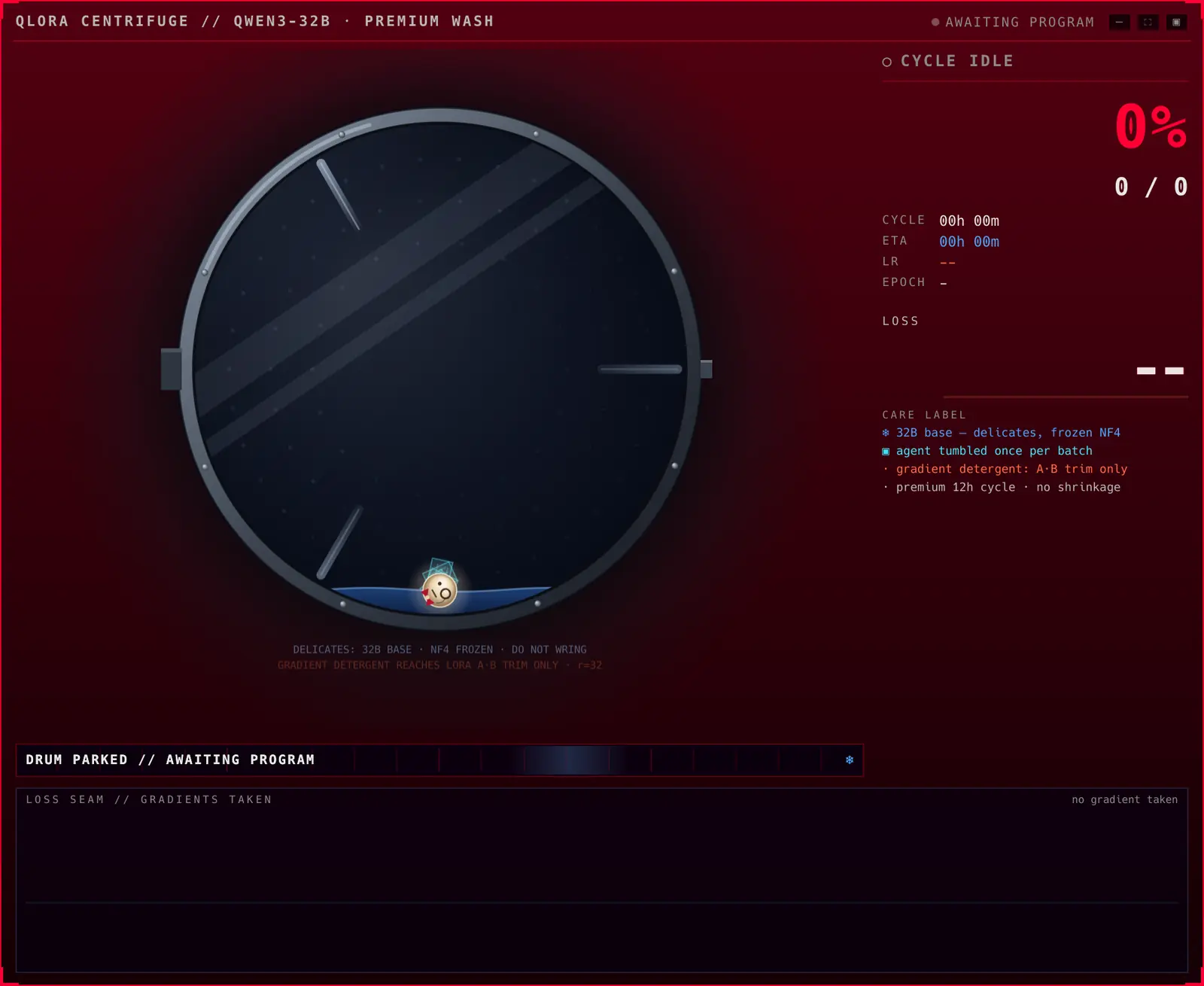
Helm's QLoRA Centrifuge face, a training monitor styled as a washing machine, with a porthole drum, idle cycle readouts, a care label and an empty loss graph.
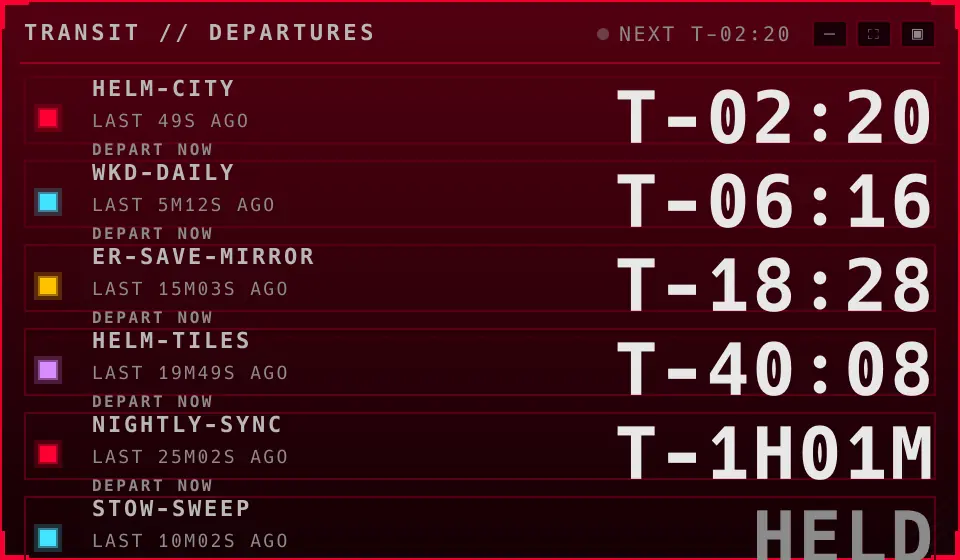
Helm's Transit face listing scheduled jobs as departures, each with a last-run time and a countdown timer.

Systems

Helm's Chroma accent face with seven color swatches, from crimson to bone, that repaint every panel.
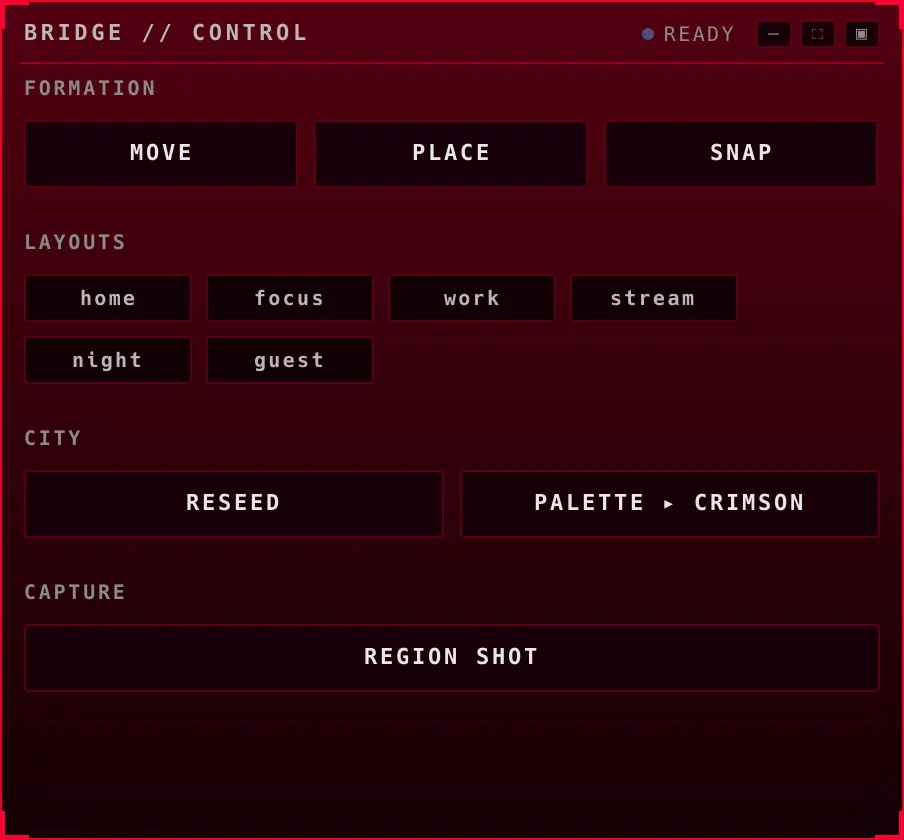
Helm's Bridge control face with buttons to move, place and snap widgets, six saved layouts, a city reseed, a palette switch and a region screenshot.

Arcade

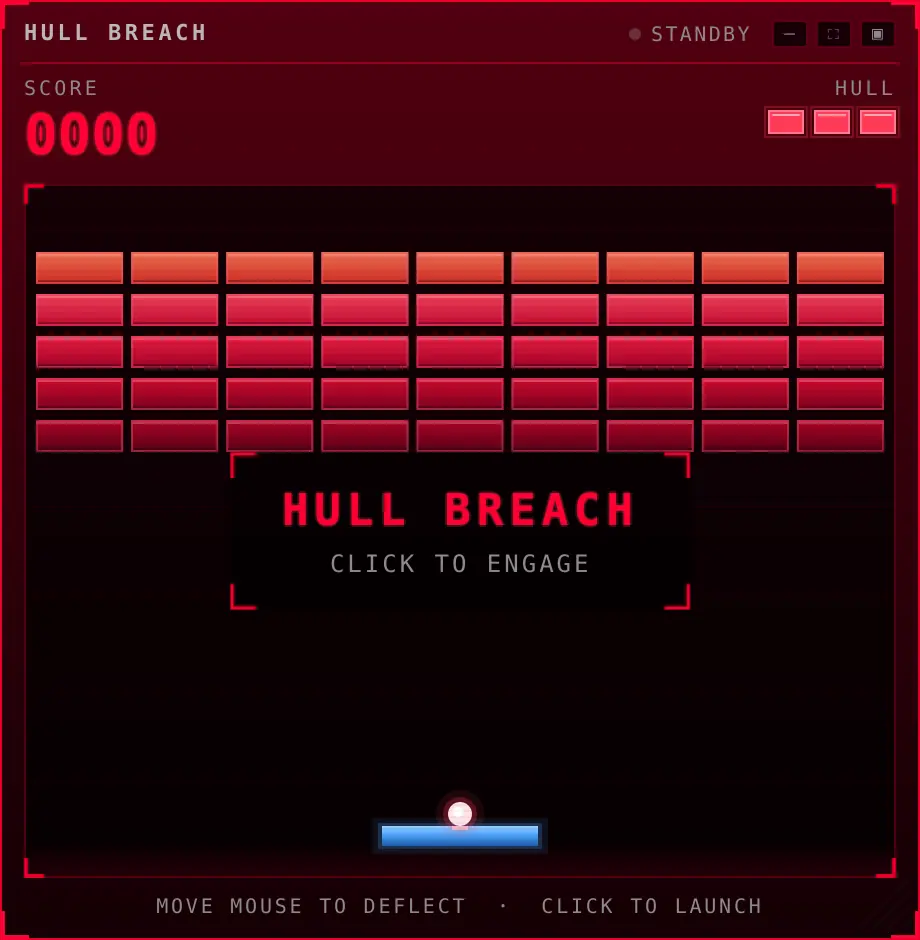
Helm's Hull Breach arcade face, a Breakout game with rows of red bricks, a blue paddle and a score and hull counter, waiting to start.
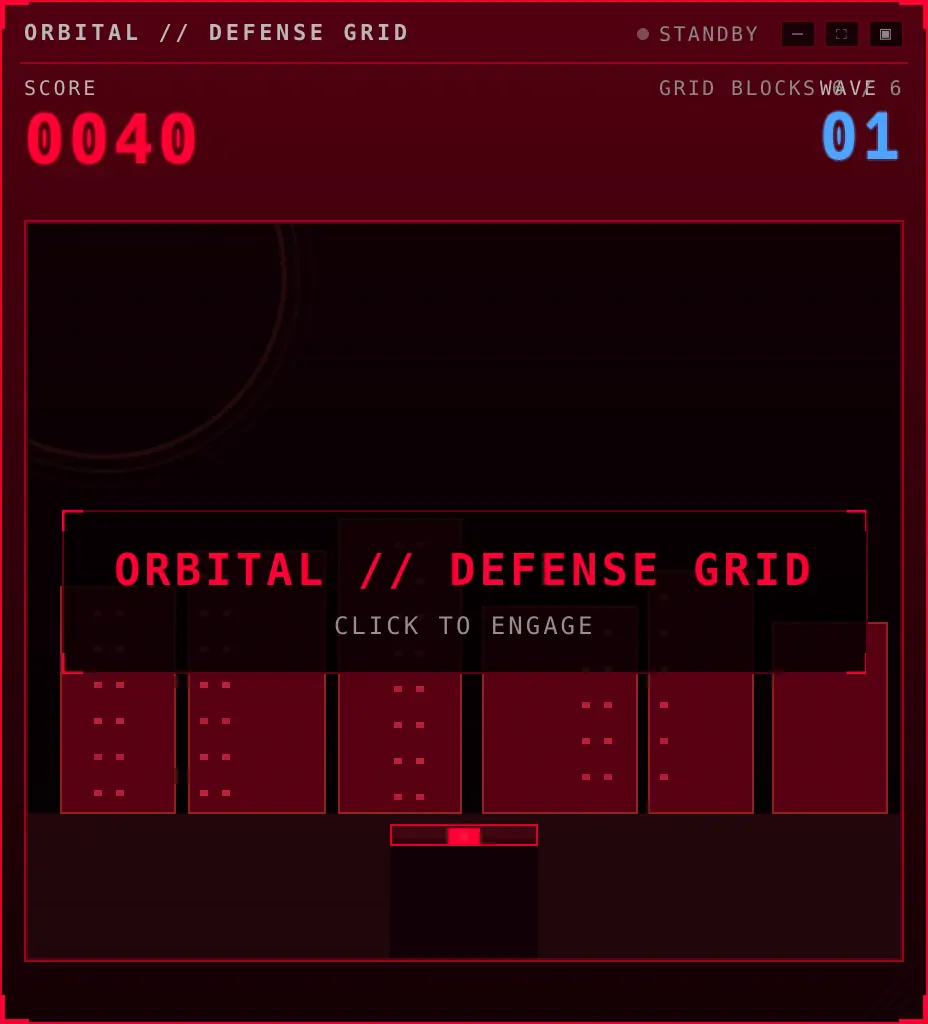
Helm's Orbital Defense Grid arcade face waiting to start: a row of city blocks to defend with a turret below them, a score of 0040 and wave 01.
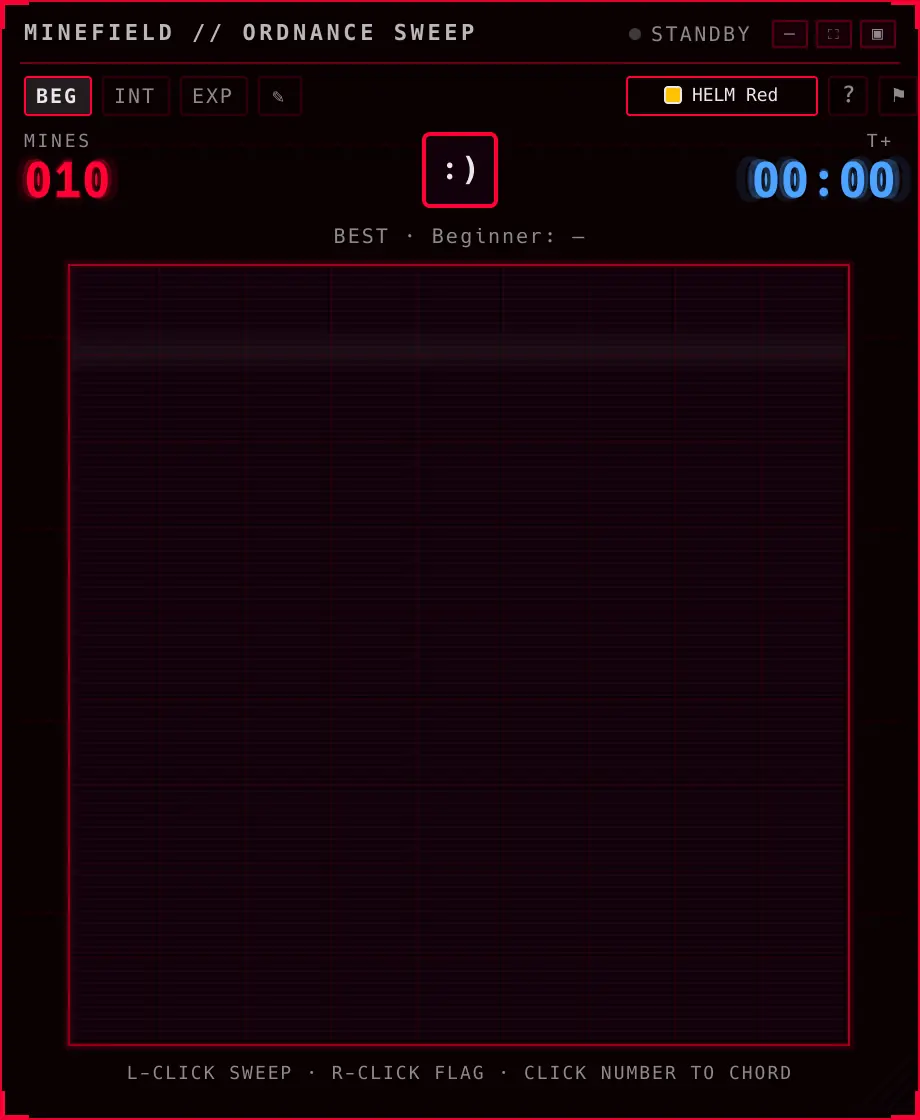
Helm's Minefield face (Ordnance Sweep), a Minesweeper game on its Beginner board: an unopened dark field under a 10-mine counter, a smiley reset button and a 00:00 timer.
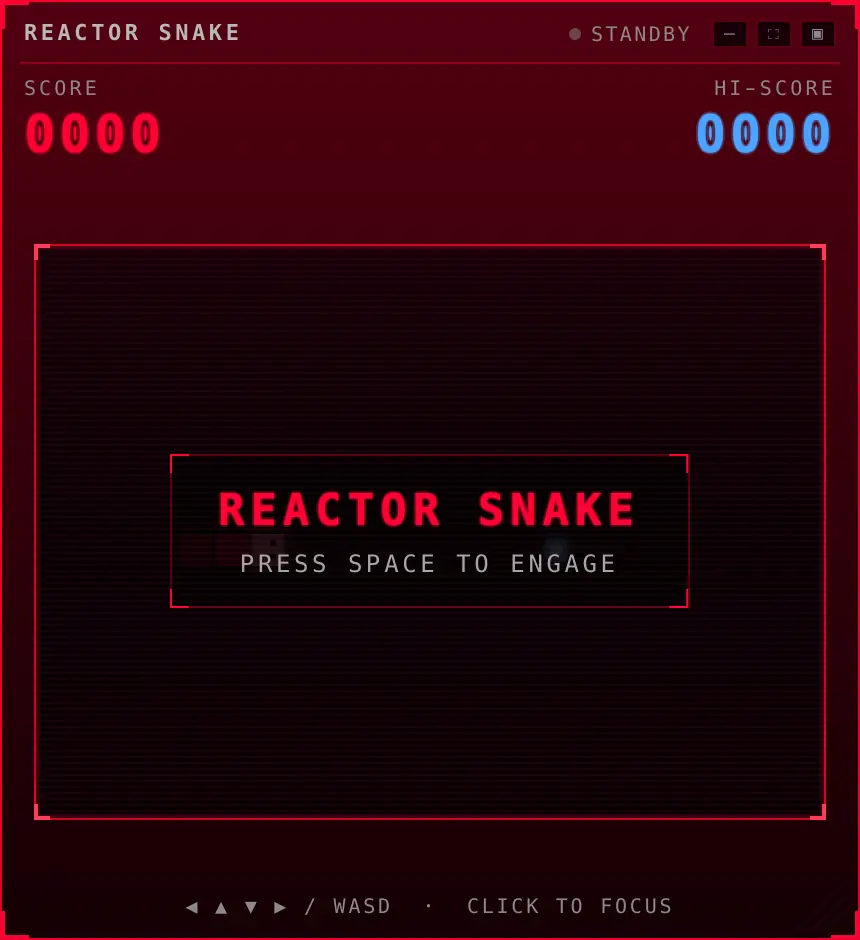
Helm's Reactor Snake face waiting to start: a dark playfield behind a Press space to engage card, with the score and hi-score at 0000 and arrow-key and WASD controls noted below.

Project portfolio